
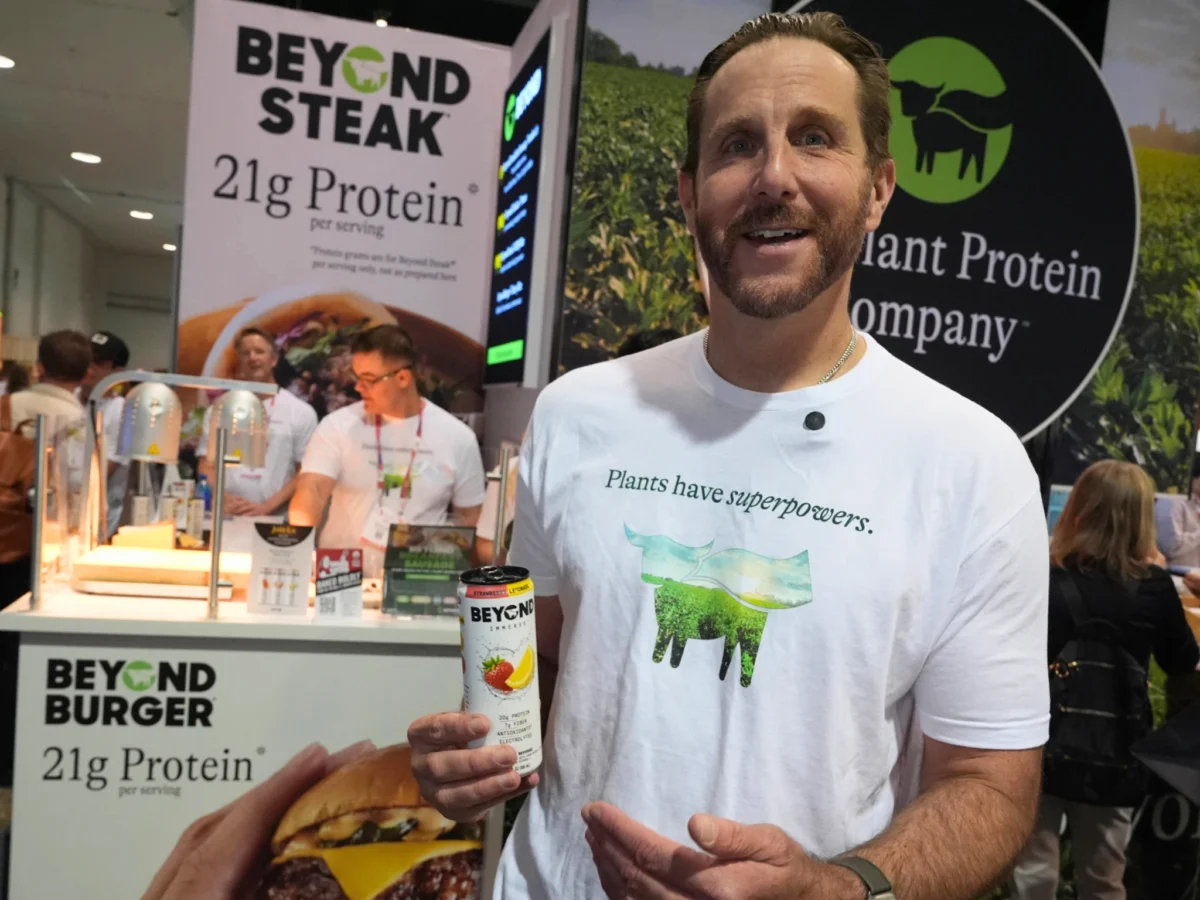
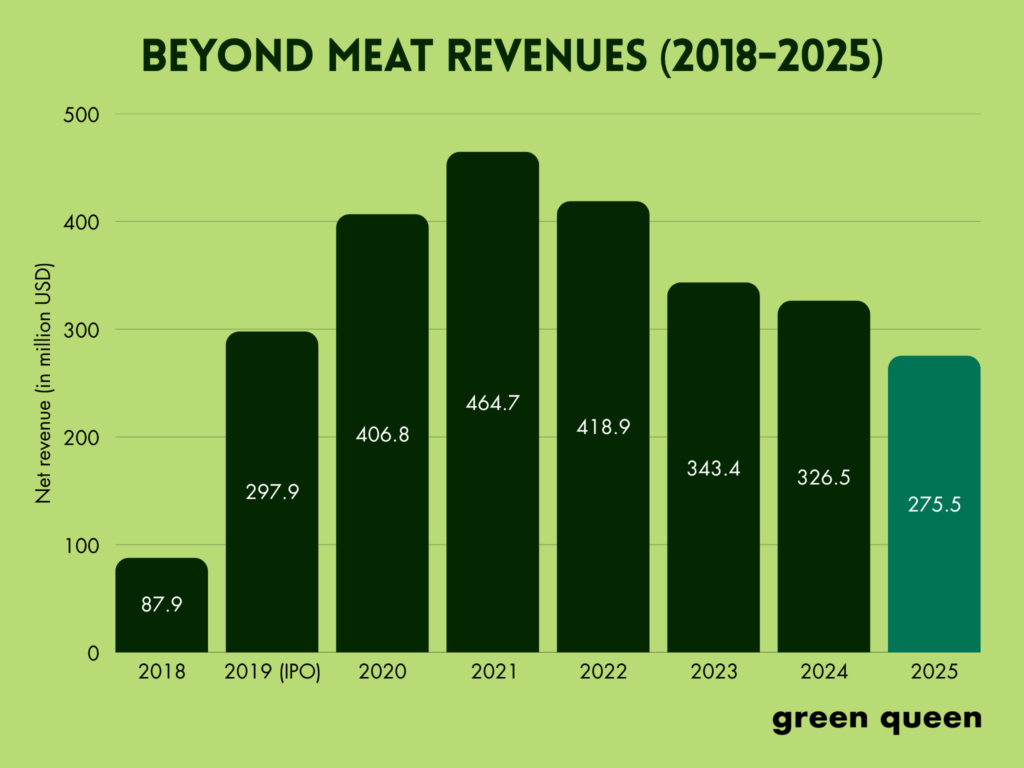
Beyond Meat’s revenues fell to a record low in 2025, with the company hoping its move into other categories and debt restructuring deal will support its path to “sustainable operations.” The plant-based pioneer, now officially rebranding as Beyond The Plant Protein Company, has released its 2025 earnings report, revealing a stark financial downturn that saw annual revenue decrease by 15.6% to $275.5 million, the lowest figure since its public debut. This period of significant contraction has prompted a strategic reevaluation, marked by a diversification of its product lines and a critical debt restructuring agreement aimed at securing the company’s long-term viability.
A Grim Financial Snapshot for 2025
The financial results for 2025 paint a challenging picture for Beyond Meat. The company’s gross profit experienced an alarming 82% decline. Compounding these losses, operating expenses more than doubled, reaching $332.7 million. This substantial increase in operating losses included a $38.9 million payout stemming from a trademark lawsuit, a significant financial burden that further impacted the company’s bottom line. In response to these pressures, Beyond Meat implemented "a couple of reductions in force," as confirmed by Chief Financial Officer Lubi Kutua, signaling a move to streamline operations and reduce overhead costs.
Despite the grim revenue figures, a crucial debt restructuring deal provided a significant, albeit one-time, financial boost. This agreement effectively reversed the $160 million net loss recorded in 2024, enabling Beyond Meat to report a net income of $220 million for 2025. The primary driver of this positive net income was a substantial cash gain of nearly $549 million realized from the debt restructuring negotiations. This financial maneuver, while critical for immediate liquidity and solvency, underscores the precarious financial position the company was in at the close of 2025.
The final quarter of 2025 mirrored the overall annual trend, with sales declining by 19.7% to $61.6 million, although this figure met the company’s revised expectations. The core issue driving this decline was a significant 22% drop in sales volume across its product lines. Gross profit in Q4 contracted by an even more severe 86%, settling at $1.4 million. The company’s gross margin also saw a dramatic reduction, narrowing from 13.1% in the fourth quarter of 2024 to a mere 2.3% in the corresponding period of 2025.
Looking ahead, Beyond Meat remains cautious about the immediate future, forecasting revenues between $57 million and $59 million for the first quarter of 2026. The company cited an "elevated level of uncertainty within its operating environment" as the basis for this conservative outlook, reflecting ongoing challenges in the plant-based protein market and broader economic headwinds.
Strategic Pivot: Beyond Meat Becomes Beyond The Plant Protein Company
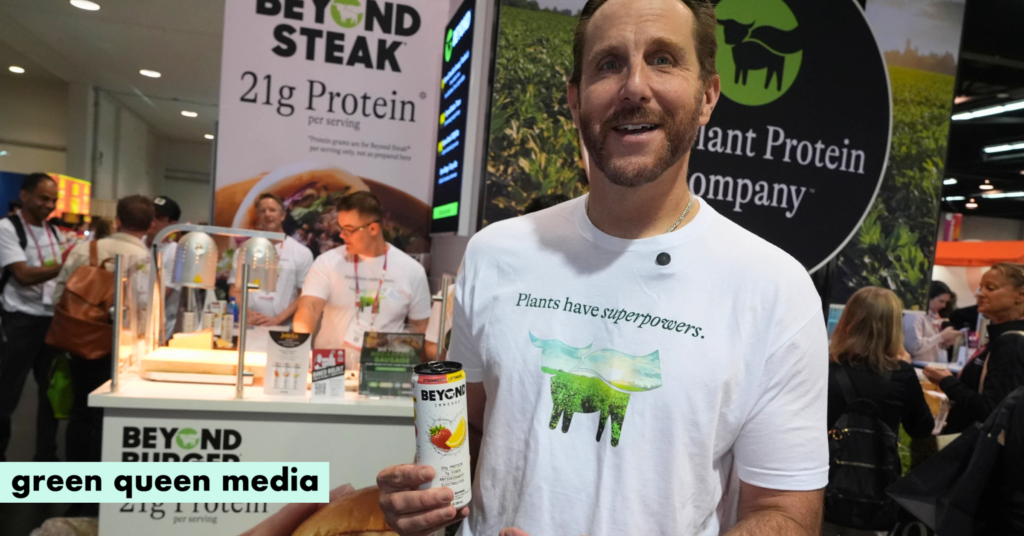
In a significant strategic shift, Beyond Meat is rebranding itself as Beyond The Plant Protein Company, or simply "Beyond." This rebranding signifies a deliberate move to expand its identity beyond traditional meat alternatives and encompass a broader range of plant-based protein products. The earnings report officially acknowledged this transition, although the company continues to utilize both names interchangeably for the time being.
Ethan Brown, Beyond Meat’s founder and CEO, articulated the rationale behind this evolution during an investor earnings call. "Our results for the fourth quarter of 2025 reflect ongoing headwinds in the plant-based meat category as well as the financial impact of several restructuring charges that, while costly, we believe will support the company’s path to sustainable operations," Brown stated. He emphasized the company’s commitment to a new trajectory: "We enter 2026 with reduced leverage and extended debt maturity, and having added liquidity to our balance sheet. We intend to build on these improvements through the continued pursuit of top-line stabilization and margin expansion."
The rebranding is central to this strategy. "We are strategically repositioning our brand to Beyond The Plant Protein Company, allowing us to enter into adjacent categories where we believe our brand, technology and commitment to clean plant-based nutrition can deliver significant value to consumers," Brown explained. He elaborated on this expansion, stating, "When I noted late last year that going forward you should not expect more of ‘the same,’ I was most of all referring to the broadening of the aperture that you see as we move from Beyond Meat to Beyond The Plant Protein Company."
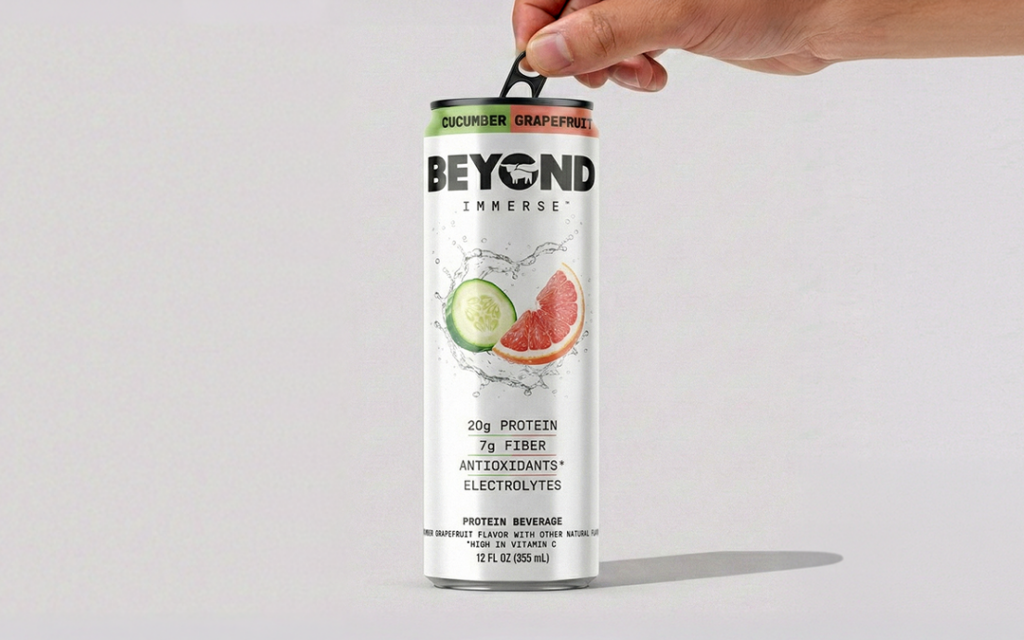
This strategic diversification includes the introduction of innovative products like a fava bean mince, which deviates from mimicking animal protein, and a line of sparkling protein drinks, aptly named "Beyond Immerse." These new offerings represent Beyond Meat’s attempt to tap into new consumer segments and markets, moving away from the increasingly saturated and challenging plant-based meat category. The Beyond Immerse line, in particular, has been highlighted as a key component of the company’s future growth strategy.
Navigating Market Headwinds and Competitive Landscape
The challenges faced by Beyond Meat in 2025 are not isolated. The broader plant-based meat category has experienced a significant slowdown. According to NielsenIQ data cited by the Associated Press, sales of plant-based meat have declined by 26% over the past two years. This trend has led Beyond Meat to acknowledge a "period of confusion" for the sector, with CEO Ethan Brown candidly admitting, "It’s just not the moment for plant-based meat right now."
However, a company representative assured Green Queen in March that the core mission remains. "As the company expands into new categories, Beyond remains committed to category leadership in plant-based meat," the representative stated. This suggests a dual-pronged approach: maintaining its presence in the plant-based meat market while aggressively pursuing growth in adjacent sectors.
Beyond Meat’s financial struggles in 2025 were not confined to a single market segment. The slowdown was pervasive across all its revenue channels. In the United States, retail sales decreased by 6.5%, primarily attributed to "weak category demand" and a reduction in distribution for some of its key products. The US foodservice sector saw an even steeper decline, with revenues falling by 23.7%. This significant drop was largely due to the expiration of a sales contract for its chicken product with a quick-service restaurant (QSR) client, coupled with a general softening of demand.
International markets also presented considerable headwinds. Outside the US, retail sales experienced a sharp 32.5% decrease, with reduced sales of its burger products in the European Union and specific retail channels in Canada being the primary drivers. International foodservice sales also contracted by nearly 32%, a decline attributed to lower sales of its burger and chicken products to certain QSR customers. Overall, Beyond Meat’s global sales in both retail and foodservice segments saw declines of 17.5% and 18.1%, respectively, with international revenues experiencing slightly smaller percentage drops of 11% and 14%.
Innovation and Targeted Market Expansion
The introduction of the Beyond Immerse line of sparkling protein drinks is a cornerstone of Beyond Meat’s diversification strategy. CEO Ethan Brown highlighted the potential of this product category, particularly its appeal to the growing market of GLP-1 users. "Moreover, we believe it is particularly well-suited for GLP-1 users," Brown stated, indicating a targeted marketing approach for this demographic. GLP-1 medications, often used for diabetes management and weight loss, can influence dietary choices and nutrient intake, making protein-rich beverages an attractive option for users.
Brown also discussed the iterative product development process for Beyond Immerse, noting consumer feedback had led to significant adjustments. While 10-gram protein versions were a success, the 20-gram protein versions proved more polarizing. "A lot of people either love it or didn’t like it much, enough people […] love it that we’re able to keep going on," he remarked. The company has been refining the formulation, adjusting flavor intensity and sweetness. "The product that they’ve developed – and we’re probably on our sixth or seventh iteration since we launched – is just phenomenal," Brown added.

Beyond Meat’s commitment to "clean ingredients" is another key differentiator it aims to leverage. Brown pointed to the company’s more than 20 products certified by the Clean Label Project and specifically mentioned its mycelium steak filet as an example. "Things that really help tell the story around Beyond and tell the clean ingredient and healthy narrative are the ones that we’re focusing on going forward," he asserted. This focus on transparency and perceived health benefits is intended to resonate with consumers increasingly scrutinizing product formulations.
Addressing the "Political Landscape" and Misinformation
Beyond Meat’s leadership has also pointed to broader societal and political factors impacting the plant-based industry. Ethan Brown alluded to the "constant surround sound of pseudoscientific jargon and positioning and promotion" that he believes can overwhelm established scientific consensus. He specifically cited the "resurgence of red meat" as a symptom of this trend.
"If I thought that Beyond and our original value proposition were struggling during a period when the role of science in public discourse and social media and government was pronounced and effective, when pricing and economic stability and buying power were favourable, and the American political landscape was characterised by a sense of common ground versus division – and Beyond were really suffering, I would be very concerned for our long-term prospects and for the plant-based meat category overall," Brown stated, suggesting that current market difficulties are exacerbated by external factors rather than solely internal product limitations.
He expressed optimism that these trends are cyclical: "But none of that is true. This is a very difficult period for the world, it’s a difficult period for our country, and one of the things most significant for our business in terms of what’s impacting it is this constant surround sound of pseudoscientific jargon and positioning and promotion that really overwhelms what is decades and decades and decades of science." Brown believes that the current pendulum swing favoring traditional meat will eventually reverse, and Beyond Meat will be well-positioned to benefit from this shift.

Future Outlook and Reaffirmation of Mission
Despite the financial downturn, Beyond Meat is asserting its long-term vision. The company is strategically expanding into adjacent markets that it believes are significantly larger than the plant-based meat category. "We’re really well positioned to look outside the category and take that technology, science and brand into segments and categories that are many, many, many times the size of the plant-based meat category," Brown declared. The beverage category, with the Beyond Immerse line, is the first identified segment for this expansion, with others expected to follow.
Brown highlighted the competitive advantages Beyond Meat believes it holds in the beverage sector. He noted that some major ready-to-drink protein companies include ingredients that Beyond Meat, due to the intense scrutiny it faces, could not incorporate into its products. "What we’ve done is tap back some of the intensity of the flavors […] and some of the sweetness in the 20g," he said, referring to product refinements. The company aims to launch what it considers "one of the best protein drinks on the market," meeting diverse consumer needs with a clean formulation.
The company’s strategic repositioning is not an abandonment of its core mission but an expansion of its reach. "Far from stepping away from our mission to change the source of protein at the center of the plate from animals to plants, we reaffirm it, and take to these promising adjacencies to introduce our brand to a much larger number of consumers than currently participating in the plant-based meat category," Brown emphasized. He stressed that this expansion is undertaken with a "firm and serious belief that our technology, our brand, and our commitment to human health and the power of plants allow us to successfully deliver unique and compelling value within the certain segments we’ve identified."
The ultimate aspiration is that this broader market engagement will indirectly lead more consumers back to Beyond Meat’s core plant-based meat offerings. By enjoying the brand’s presence in "less controversial, more convenient products like Beyond Immerse," consumers may become more receptive to the company’s foundational plant-based meat alternatives. This strategy hinges on leveraging its brand recognition and commitment to clean ingredients to build trust and broaden its consumer base across multiple product categories. The coming years will be critical in determining whether this ambitious pivot can indeed steer Beyond Meat toward sustainable operations and a renewed path to growth.