
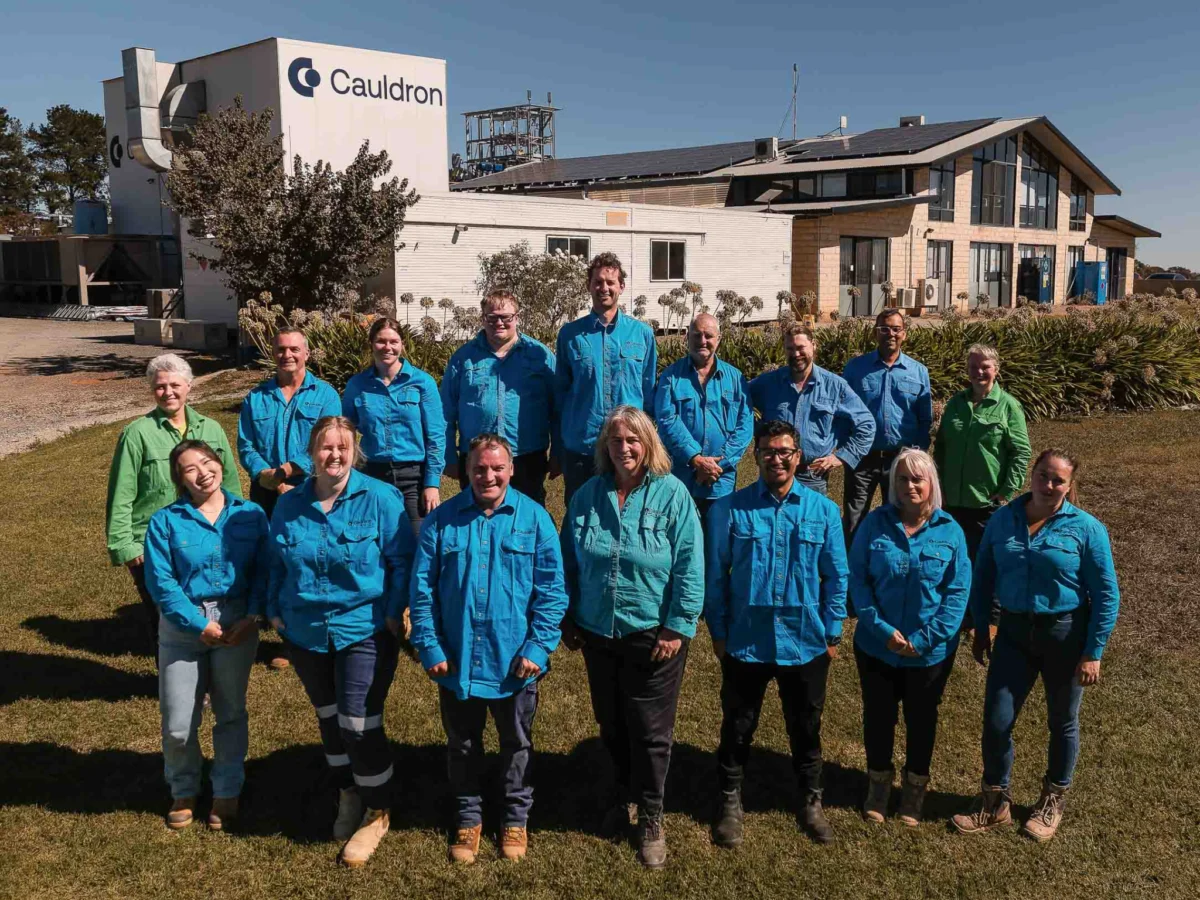
Cauldron Ferm, an Australian innovator in biomanufacturing, has successfully closed a Series A2 funding round, raising $13.25 million. This significant capital injection is earmarked for the expansion of its proprietary "hyper-fermentation" platform, a technology designed to overcome the persistent challenges of scale and cost-efficiency that have historically constrained the biomanufacturing sector. The company’s unique approach aims to maximize microbial productivity in a continuous process, addressing a critical need for scalable and cost-effective production of high-value ingredients.
The funding round was spearheaded by Main Sequence Ventures, a prominent venture capital firm focused on deep technology, with substantial participation from Horizons Ventures, SOSV, and NGS Super. This latest investment brings Cauldron Ferm’s total raised capital to an impressive $26 million, underscoring the growing investor confidence in its innovative technology and its potential to reshape industrial biomanufacturing.
The capital infusion will be strategically deployed to accelerate the deployment of Cauldron Ferm’s precision fermentation technology. This expansion is directly driven by increasing demand from both government entities and corporations that are actively investing in and seeking to build robust biomanufacturing infrastructure. These planned facility expansions will also benefit from additional backing through federal and state government grants, highlighting a concerted national effort to foster a thriving domestic biomanufacturing ecosystem.
This significant funding achievement comes at a particularly opportune moment for Cauldron Ferm, which has also been recognized by Fast Company on its prestigious list of the Most Innovative Asia-Pacific Companies of 2026. The publication specifically lauded the firm for its pioneering work in "lowering the costs of industrial-scale biomanufacturing," a testament to the disruptive potential of its hyper-fermentation approach.
Cauldron Ferm Bets on ‘Bioprocess Innovation’ to Fortify the Supply Chain
At its core, Cauldron Ferm’s strategy hinges on pioneering advancements in bioprocess innovation to address the inherent vulnerabilities and fragilities of global supply chains. The company’s technology is built upon extensive research and development, drawing from 35 years of experience originating from Agritechnology, where CEO and co-founder Michele Stansfield previously dedicated over a decade.
Cauldron Ferm’s "hyper-fermentation" technology is characterized by a novel bioreactor design coupled with a proprietary growth medium formulation. This synergistic combination enables a continuous fermentation process that significantly reduces net unit costs, by as much as 50%. Furthermore, it delivers approximately 20% more output while requiring 45% less capital expenditure (capex) compared to conventional methods.
The operational protocols and unique bioprocesses underpinning hyper-fermentation are meticulously designed to maintain genetic stability within the microbial cultures and maximize their productivity. This creates an "assembly line" effect, achieving peak efficiency that can be sustained over extended periods. In contrast to traditional fed-batch fermentation methods, Cauldron Ferm’s continuous process allows for more frequent harvesting of larger volumes of product. This enhanced productivity directly translates into substantial reductions in manufacturing costs, making bio-based products more competitive in industrial markets.
The operational advantages extend to resource efficiency. Cauldron Ferm’s smaller-scale equipment consumes less electricity and water. The non-stop nature of the process necessitates less frequent sterilization, thereby reducing utility expenditures. Concurrently, fixed costs are lowered through reduced labor requirements and decreased reliance on capital-intensive infrastructure.
The company posits that its model offers a compelling solution to the escalating fragility of global supply chains. Data from 2024 revealed that a substantial 80% of organizations reported experiencing supply chain disruptions. This underscores the urgent need for resilient and localized production capabilities. Experts suggest that up to 60% of the physical inputs to the global economy could potentially be produced biologically, a transformative shift that Cauldron Ferm is actively working to make commercially viable.
Cauldron Ferm holds a unique position in Australia as the sole entity licensed to manufacture precision-fermented protein ingredients at the 10,000-liter scale. In 2024, the company achieved a significant regulatory milestone when it was granted a DIR200 license by the Department of Health’s Office of the Gene Technology Regulator (OGTR) for its Pichia pastoris strain. This license, following a comprehensive assessment at the company’s demonstration facility, allows for the large-scale use of this microbial strain.
The firm has successfully demonstrated its hyper-fermentation process to clients across diverse sectors, including bio-based food, chemicals, and nutraceuticals. Currently, Cauldron Ferm operates a demonstration facility in New South Wales, partially funded by the federal government, boasting a significant fermentation capacity of 30,000 liters.
Michele Stansfield, CEO of Cauldron Ferm, emphasized the critical role of bioprocess innovation in achieving industrial competitiveness. "For biomanufacturing to compete in industrial sectors, bioproducts have to deliver on costs, scale, and quality," Stansfield stated. "Bioprocess innovation is how we get there. This milestone reflects the impact of our platform at a time when governments and corporations are urgently seeking competitive bio-based solutions to address supply chain pressure."
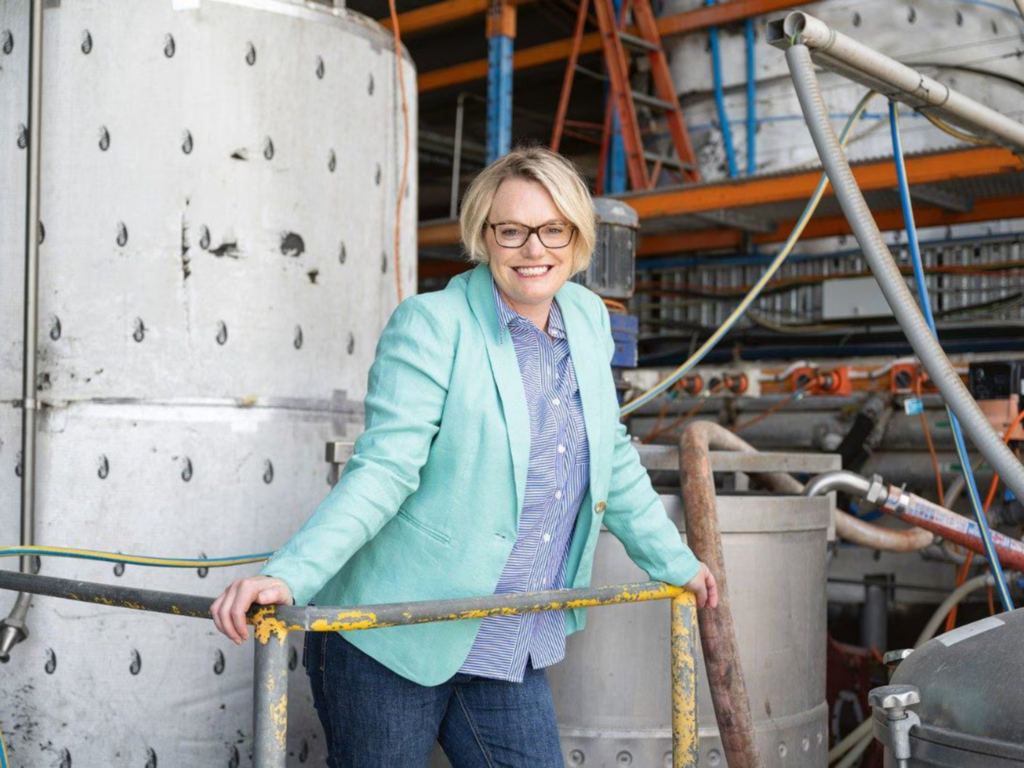
Cauldron Ferm Eyeing New Fermentation Facilities to Expand Biomanufacturing Footprint
The global biomanufacturing landscape is poised for substantial growth, with projections indicating that fermentation technology could account for 4% of global protein production by 2050. However, achieving this ambitious target necessitates an estimated $250 billion in investment to meet the projected capacity demands.
A 2025 report by McKinsey highlighted the investment opportunity, stating, "Leaders can continue building creative mechanisms to balance capital, risk, and returns. If players can enter this investment opportunity now, they have a chance to build the food supply chain of the future."
Cauldron Ferm is strategically positioning itself at the vanguard of this transformative shift, aiming to become the largest end-to-end contract manufacturer for precision-fermented bioproducts in the Asia-Pacific region. This ambition is bolstered by its continuous hyper-fermentation platform, which directly addresses the sector’s primary constraint: enhancing productivity and improving unit economics at an industrial scale.
Ben Squires, Chief Investment Officer at NGS Super, articulated the rationale behind their investment: "Cauldron’s continuous hyper-fermentation platform is focused on the key constraint in the sector: improving productivity and unit economics at industrial scale. That combination of technology differentiation and real-world commercial validation is why we decided to invest."
The company is currently undertaking the construction of a commercial-scale plant in Mackay, Queensland. This facility is designed to feature a substantial fermentation capacity of 500,000 liters and is supported by the state government. Upon completion, it is slated to produce inputs for a wide array of industries, including food, nutrition, materials, beauty, personal care, chemicals, and biofuels, with an anticipated annual output exceeding 1,000 tonnes.
This expansion in Queensland is envisioned as the first step in a broader global strategy. Cauldron Ferm plans to establish a network of industrial facilities across multiple international markets. To achieve this, the company is actively collaborating with corporate partners to explore the retrofitting of existing industrial sites, a more sustainable and cost-effective approach to deploying its hyper-fermentation technology. Over the past year, Cauldron Ferm has successfully onboarded six new clients, ranging from emerging startups to established multinational corporations, demonstrating the broad applicability and demand for its services.
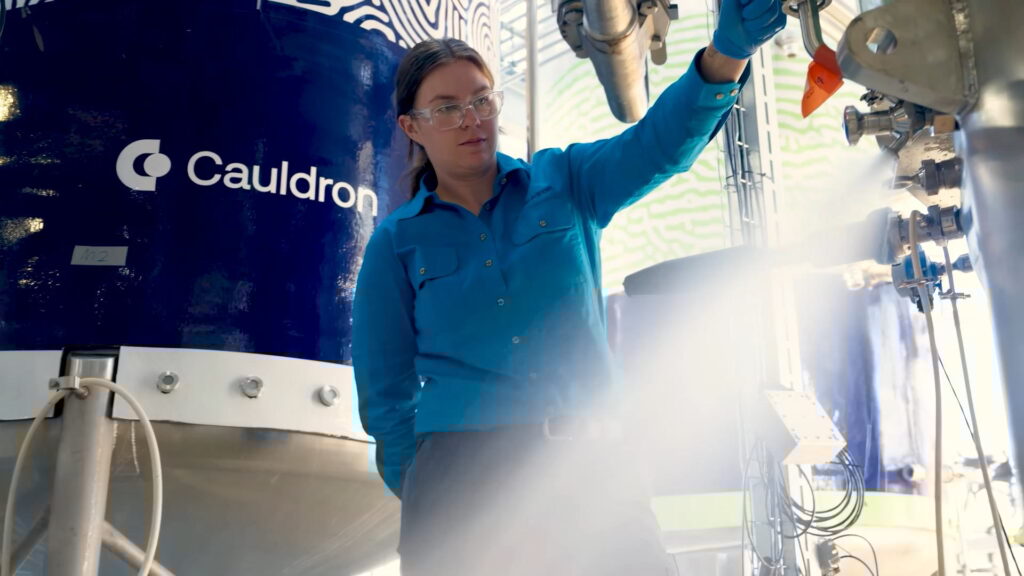
Phil Morle, Partner at Main Sequence Ventures, underscored the significance of Cauldron Ferm’s technological advancements. "Cauldron is proving that biology can run continuously, predictably, and at the volumes global supply chains demand. Hyper-fermentation closes the gap between breakthrough strains and reliable, cost-competitive production," Morle commented. He further elaborated on Main Sequence’s investment philosophy, stating, "In a market distracted by AI hype cycles, we’re backing the hard, physical work of scaling biology. That’s what builds enduring companies, and it’s why we believe Cauldron is at the forefront of making bioindustrial manufacturing commercially inevitable."
The broader context of Australia’s biomanufacturing ambitions is illuminated by the activities of Main Sequence Ventures, which was founded by Australia’s national science agency, CSIRO. However, the Australian science landscape faces its own challenges. CSIRO is currently undergoing significant restructuring, with up to 350 jobs reportedly set to be cut this year due to funding shortfalls. Certain research areas, including food ingredients and processing, are facing de-prioritization. This situation is occurring despite consistent calls from experts for increased government support for biomanufacturing through robust financial and policy incentives. The success of companies like Cauldron Ferm, therefore, not only signifies commercial achievement but also highlights the critical need for sustained and strategic governmental backing to realize the full potential of Australia’s bioeconomy.
The implications of Cauldron Ferm’s advancements are far-reaching. By offering a more cost-effective and scalable method for producing bio-based ingredients, the company has the potential to accelerate the transition away from traditional, less sustainable manufacturing processes. This can lead to reduced environmental impact, enhanced supply chain resilience, and the development of novel products across numerous sectors. The company’s focus on retrofitting existing facilities also presents an attractive model for industrial transformation, enabling established businesses to pivot towards bio-based production with potentially lower upfront investment. As global demand for sustainable and domestically produced goods continues to rise, Cauldron Ferm’s hyper-fermentation platform is poised to play a pivotal role in shaping the future of industrial manufacturing.