
Parkinson’s disease, a relentless neurodegenerative disorder, currently impacts over one million individuals in the United States and an estimated ten million globally. This complex condition systematically erodes the nervous system, leading to a cascade of debilitating symptoms. These often include uncontrollable tremors, significant difficulties with motor control and coordination, pervasive sleep disturbances, and a progressive decline in cognitive function. While current therapeutic strategies, primarily long-term pharmacological interventions and surgically implanted deep brain stimulation (DBS), offer some respite by alleviating symptoms, they fall short of halting the disease’s insidious progression or providing a definitive cure. However, a groundbreaking international research collaboration, spearheaded by China’s Changping Laboratory in conjunction with the Washington University School of Medicine in St. Louis and a consortium of other esteemed institutions, has unveiled a critical advancement: the identification of a specific brain region intrinsically linked to the core manifestations of Parkinson’s disease. This pivotal discovery centers on a newly delineated brain network, termed the somato-cognitive action network (SCAN), which researchers have established plays a pivotal role in the pathophysiology of the disorder. Crucially, when this SCAN network was specifically targeted using a non-invasive experimental modality known as transcranial magnetic stimulation (TMS), patients demonstrated a remarkable improvement in symptoms, more than doubling the efficacy observed when adjacent, non-SCAN brain regions were stimulated. These profound findings, formally published on February 4th in the prestigious scientific journal Nature, not only challenge decades of established understanding regarding Parkinson’s disease but also herald the dawn of a new era characterized by more precise, personalized, and potentially disease-modifying therapeutic approaches.
Unveiling the SCAN: A New Frontier in Parkinson’s Understanding
The significance of this discovery cannot be overstated. Dr. Nico U. Dosenbach, a co-author of the study and the David M. & Tracy S. Holtzman Professor of Neurology at WashU Medicine, articulated the transformative implications: "This work demonstrates that Parkinson’s is a SCAN disorder, and the data strongly suggest that if you target the SCAN in a personalized, precise manner you can treat Parkinson’s more successfully than was previously possible." He further elaborated on the potential for a paradigm shift from symptom management to disease modification, stating, "Changing the activity within SCAN could slow or reverse the progression of the disease, not just treat the symptoms." This statement points toward a future where treatments might aim to repair or restore neural function rather than merely compensating for its loss.
The SCAN network itself was first described by Dr. Dosenbach in a 2023 publication in Nature. Located within the motor cortex, the brain’s command center for voluntary movement, the SCAN’s primary function is to translate intended actions into actual physical motion. It also plays a crucial role in monitoring the execution and outcome of these movements. Recognizing that Parkinson’s disease extends its reach far beyond motor impairments, affecting a wide array of bodily functions including digestion, sleep regulation, motivation, and cognitive processes, senior author Dr. Hesheng Liu, PhD, initiated a collaborative effort with Dr. Dosenbach. Their shared objective was to ascertain whether dysfunctions within the SCAN network could elucidate the broad spectrum of Parkinson’s symptoms and, importantly, serve as a viable target for therapeutic intervention.
Illuminating Abnormal Connectivity: A Network-Centric View of Parkinson’s
To rigorously test their hypothesis, Dr. Liu’s team embarked on an extensive analysis of brain imaging data. This comprehensive dataset comprised information from over 800 participants, meticulously gathered from multiple research centers across both the United States and China. The participant cohort was strategically diverse, including individuals diagnosed with Parkinson’s disease who were undergoing various forms of treatment, such as DBS, non-invasive therapies like transcranial magnetic stimulation and focused ultrasound stimulation, and pharmacological interventions. For comparative purposes, the study also incorporated data from healthy volunteers and individuals diagnosed with other movement disorders, providing essential benchmarks for their findings.
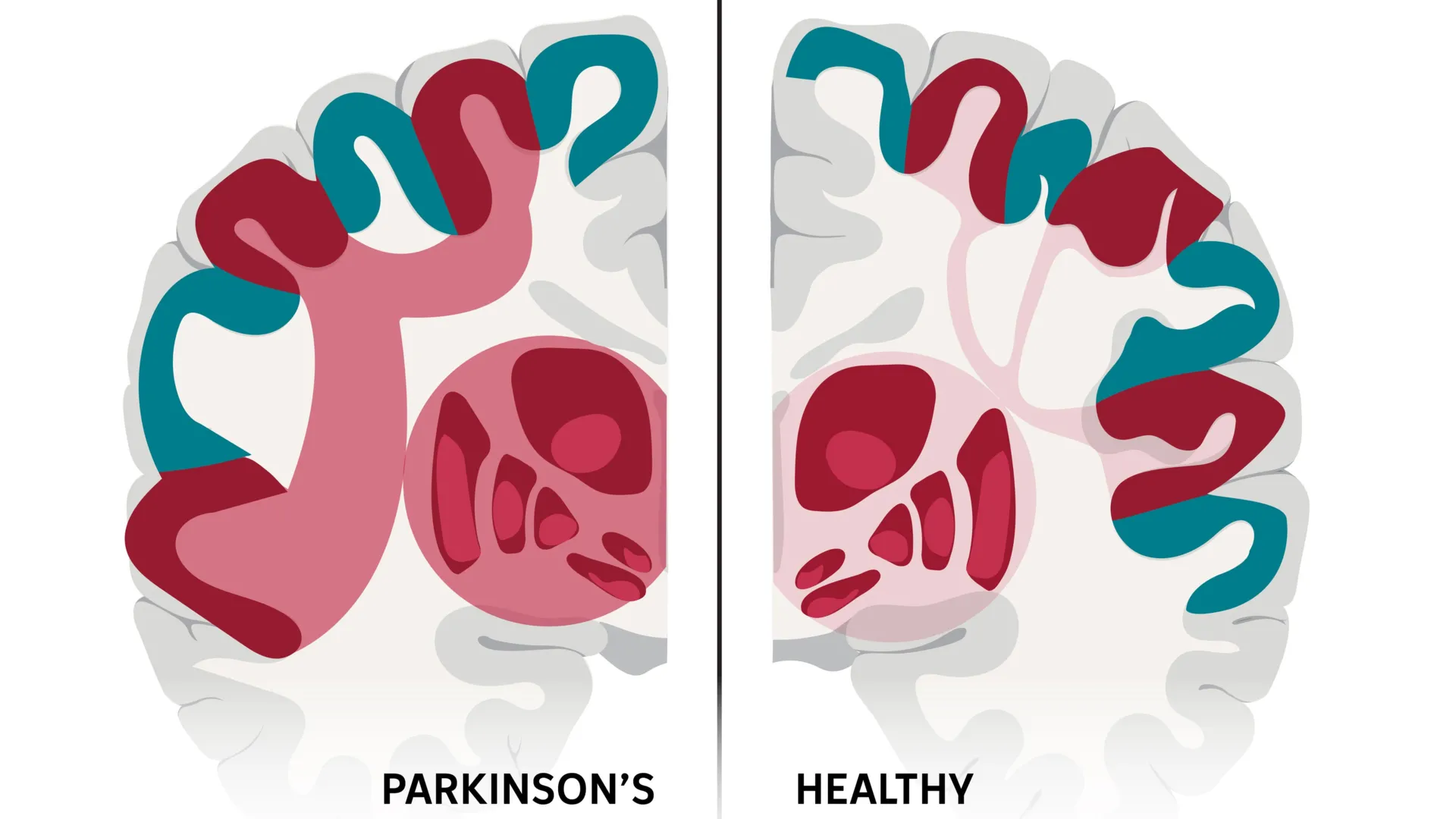
The detailed analysis of this extensive data revealed a striking pattern: Parkinson’s disease is characterized by an aberrant and excessive degree of connectivity between the SCAN network and the subcortex. The subcortex, a deep-seated region of the brain, is critically involved in a multitude of functions, including emotional processing, memory formation, and fine-tuned motor control. The study’s findings indicated that the effectiveness of all four examined therapeutic modalities was significantly enhanced when they succeeded in reducing this pathological overconnection between the SCAN and the subcortex. By restoring a more harmonious and balanced interplay between these brain regions, the treatments appeared to normalize the activity within the neural circuits responsible for the intricate planning and coordination of actions.
Dr. Liu underscored the paradigm shift this research represents: "For decades, Parkinson’s has been primarily associated with motor deficits and the basal ganglia, the part of the brain that controls muscle movements. Our work shows that the disease is rooted in a much broader network dysfunction. The SCAN is hyperconnected to key regions associated with Parkinson’s disease, and this abnormal wiring disrupts not only movement but also related cognitive and bodily functions." This assertion directly challenges the long-held, predominantly motor-centric view of Parkinson’s, highlighting its pervasive impact on a wider neural architecture.
Precision Targeting: The Dawn of Non-Invasive Therapies
Building upon these foundational insights into SCAN’s role and its aberrant connectivity, the research team ingeniously developed a novel precision treatment system. This innovative approach is designed to target the SCAN network without the need for invasive surgery, achieving a remarkable level of accuracy measured in millimeters. The system leverages transcranial magnetic stimulation (TMS), a non-invasive technique that employs precisely controlled magnetic pulses delivered to specific brain areas via a device positioned on the patient’s head.
The efficacy of this targeted approach was rigorously evaluated in a clinical trial involving 18 patients. Those who received TMS stimulation specifically directed at the SCAN network demonstrated a significant response rate of 56% after just two weeks of treatment. In stark contrast, only 22% of a control group of 18 patients, who received stimulation directed at adjacent brain regions, experienced improvements. This translates to a more than 2.5-fold increase in therapeutic effectiveness when the SCAN was the primary target.
Dr. Dosenbach highlighted the potential for earlier intervention with these non-invasive methods: "With non-invasive treatments, we could start treating with neuromodulation much earlier than is currently done with DBS because they don’t require brain surgery." This opens up possibilities for initiating therapeutic interventions at earlier stages of the disease, potentially mitigating symptom progression before significant neural damage occurs.
Future Directions and Broader Implications
While these findings represent a monumental leap forward, the researchers acknowledge that further foundational research is imperative. Understanding precisely how different sub-regions within the SCAN contribute to specific Parkinson’s symptoms remains a critical area for future investigation.
Looking ahead, Dr. Dosenbach is actively pursuing the translation of these discoveries into tangible clinical applications. He plans to initiate clinical trials through Turing Medical, a WashU Medicine startup he co-founded. These trials will evaluate a non-invasive therapy utilizing surface electrode strips placed over SCAN regions, specifically designed to address gait disturbances, a common and disabling symptom in individuals with Parkinson’s disease. Furthermore, Dr. Dosenbach intends to explore the potential of low-intensity focused ultrasound as another non-invasive modality for modulating SCAN activity through acoustic energy.
The implications of this research extend far beyond the immediate treatment of Parkinson’s disease. The identification of the SCAN as a central player in a complex neurodegenerative disorder suggests that similar network-based dysfunctions might underlie other neurological and psychiatric conditions. This network-centric approach to understanding and treating brain disorders could pave the way for a more holistic and effective therapeutic landscape across a spectrum of neurological diseases. The successful application of non-invasive neuromodulation techniques, guided by precise network identification, offers a beacon of hope for millions worldwide living with Parkinson’s and potentially for individuals grappling with a host of other neurological challenges. This research underscores the power of international collaboration and interdisciplinary scientific inquiry in pushing the boundaries of medical understanding and therapeutic innovation.