
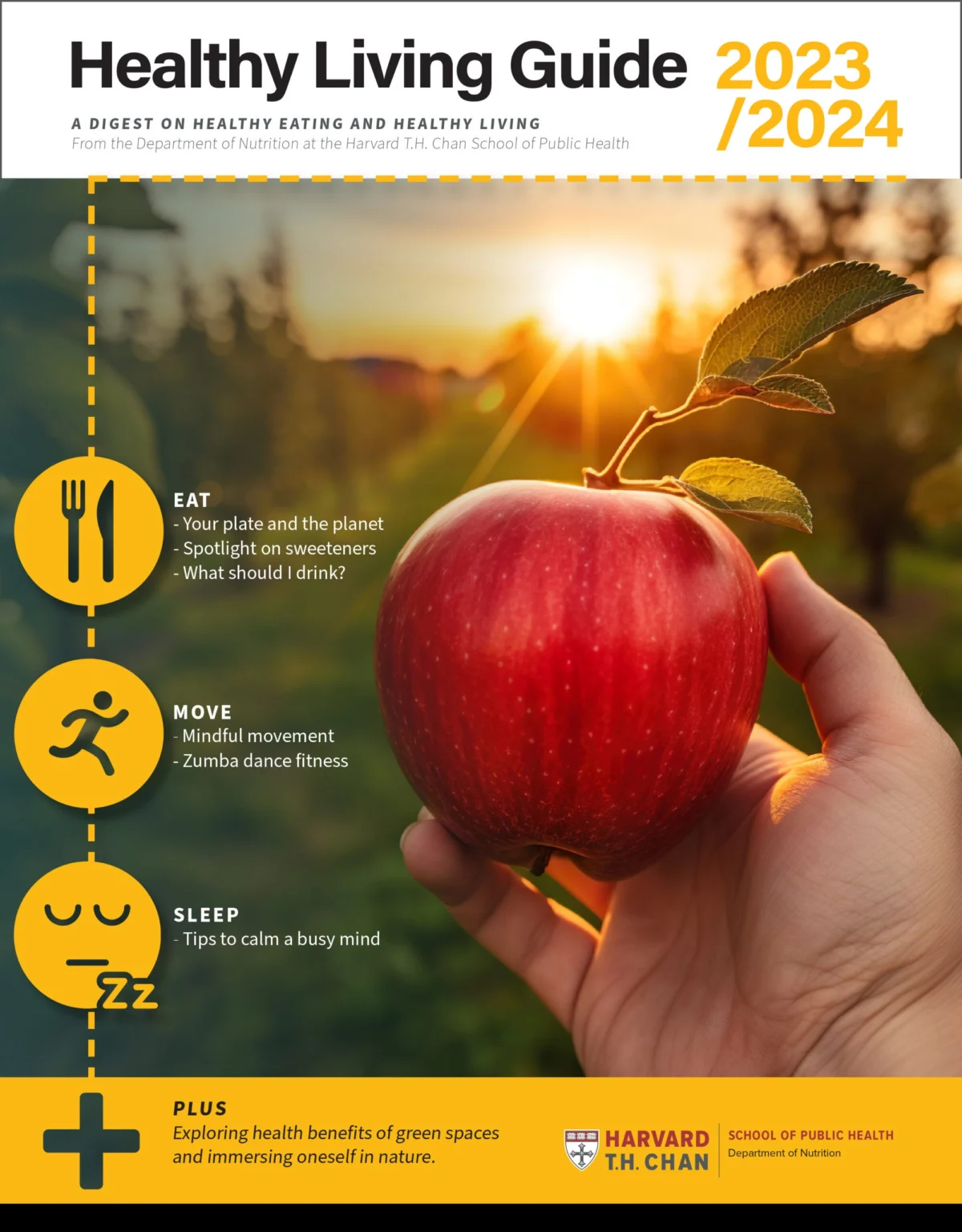
The Department of Nutrition at Harvard T.H. Chan School of Public Health has released its fourth annual Healthy Living Guide, marking a significant expansion of its commitment to promoting well-being, particularly through the lens of mindfulness. This year’s guide, launched at the beginning of 2024, emphasizes the integration of mindful practices into daily life, a theme directly influenced by the establishment of the Thich Nhat Hanh Center for Mindfulness in Public Health. The center, a recent and noteworthy addition to the university’s academic landscape, is dedicated to exploring and implementing mindfulness-based interventions to enhance public health outcomes on a global scale, extending beyond individual benefits to encompass broader societal and environmental impacts.
The philosophical underpinnings of the guide are poetically introduced with a quote from Thich Nhat Hanh: "The apple in your hand is the body of the cosmos." This sentiment underscores the interconnectedness of personal choices, such as what we eat, with larger ecological and universal systems. The guide’s release heralds a new year with a renewed focus on this holistic approach to health, building upon the research and insights gathered throughout 2023.
The Thich Nhat Hanh Center for Mindfulness in Public Health: A New Era of Well-being Research
The establishment of the Thich Nhat Hanh Center for Mindfulness in Public Health in 2023 represents a pivotal moment for the Department of Nutrition and the broader field of public health. The center’s mission is to bridge the ancient wisdom of mindfulness with modern scientific inquiry, aiming to develop and disseminate evidence-based strategies for improving health and well-being across diverse populations. This initiative is particularly significant as it directly addresses the growing recognition of the impact of lifestyle choices on both individual health and the health of the planet.
Mindful eating, a cornerstone of the center’s research, is presented as a powerful tool for fostering healthier relationships with food, improving digestive health, and promoting sustainable food systems. The integration of this concept throughout the Healthy Living Guide signifies a strategic effort to translate cutting-edge research into actionable advice for the public. The center’s work is expected to generate a wealth of data and insights that will inform public health policies and interventions for years to come, potentially leading to widespread adoption of mindfulness practices in healthcare, education, and community programs.
Key Research Highlights and Practical Guidance
The Healthy Living Guide is structured around established pillars of healthy living: nutrition, physical activity, and sleep. This year’s edition features updated research and practical tips across these domains, reflecting the latest scientific understanding and emerging trends.
-
Nutrition and Ultra-Processed Foods: A significant focus within the nutrition section is the ongoing research into the impact of ultra-processed foods (UPFs) on mental health. Studies have increasingly linked high consumption of UPFs to a range of adverse mental health outcomes, including depression and anxiety. The guide likely provides an overview of the current scientific consensus, offering practical strategies for reducing UPF intake. This might include advice on reading food labels, prioritizing whole foods, and understanding the economic and social factors that contribute to UPF consumption. The implications of this research are far-reaching, potentially influencing dietary guidelines, food industry practices, and public health campaigns aimed at improving population mental well-being. For instance, understanding the prevalence of UPFs in school cafeterias or workplace canteens could lead to policy changes aimed at improving food environments.
-
Physical Activity and Movement: The guide explores engaging ways to incorporate physical activity into daily routines, highlighting the benefits of diverse forms of exercise. This year, the spotlight is on the energetic dance-based workout, Zumba, and the broader concept of "turning up the tunes and moving." This approach emphasizes the enjoyment and social aspects of physical activity, suggesting that making exercise fun can significantly increase adherence. Research has consistently shown that regular physical activity is crucial for maintaining cardiovascular health, managing weight, reducing the risk of chronic diseases such as type 2 diabetes and certain cancers, and improving mood. The guide likely offers tips on how to find enjoyable activities, incorporate movement into sedentary jobs, and leverage music to enhance motivation and performance. The potential impact of promoting joyful movement extends to combating sedentary lifestyles, a growing public health concern.
-
Sleep and Chronotypes: Understanding the nuances of sleep is another critical component of the guide. This year, the focus is on "sleep chronotypes"—an individual’s natural predisposition to sleep and wake at certain times. Recognizing one’s chronotype, whether an "early bird" or a "night owl," can inform strategies for optimizing sleep hygiene and aligning daily schedules with natural biological rhythms. The guide likely delves into the scientific evidence supporting different sleep patterns and their impact on overall health, including cognitive function, metabolic health, and immune response. Poor sleep is a well-documented risk factor for numerous health problems, and personalized approaches based on chronotypes could offer more effective solutions than one-size-fits-all recommendations. This research has implications for workplace scheduling, educational institutions, and public health campaigns advocating for better sleep practices.
Chronology of the Healthy Living Guide and Related Initiatives
The Healthy Living Guide has evolved over four editions, reflecting a growing and deepening commitment to comprehensive health promotion.
- 2020-2021: The inaugural edition likely laid the groundwork, introducing core concepts of nutrition, physical activity, and sleep, potentially in response to rising public health concerns.
- 2021-2022: Subsequent editions would have built upon this foundation, incorporating emerging research and expanding the scope of advice.
- 2022-2023: This period likely saw increased attention to the interplay between different health behaviors and the growing body of evidence on factors like ultra-processed foods.
- 2023-2024: The current edition marks a significant turning point with the formal integration of mindfulness principles, driven by the launch of the Thich Nhat Hanh Center. This indicates a strategic shift towards a more holistic and integrated approach to well-being, acknowledging the profound connection between mental and physical health, and between individual choices and planetary health. The establishment of the center itself, a major event in 2023, directly informs the thematic direction of this year’s guide.
Supporting Data and Scientific Rationale
The insights presented in the Healthy Living Guide are rooted in a robust body of scientific evidence. For instance, the focus on ultra-processed foods aligns with findings from numerous epidemiological studies. A 2022 study published in The American Journal of Clinical Nutrition, for example, found a correlation between higher consumption of UPFs and increased risk of depression. Similarly, research on physical activity consistently demonstrates its protective effects against chronic diseases. The World Health Organization (WHO) estimates that physical inactivity is responsible for approximately 3.2 million deaths globally each year. Regarding sleep, research on chronotypes is supported by genetic and hormonal studies that explain individual differences in circadian rhythms. Disruptions to these rhythms, often seen in shift workers or individuals with untreated sleep disorders, are linked to increased risks of metabolic syndrome, cardiovascular disease, and certain cancers.
Broader Impact and Implications
The Healthy Living Guide serves as more than just a collection of tips; it acts as a conduit for disseminating evidence-based public health information. By emphasizing mindfulness, the guide has the potential to foster a paradigm shift in how individuals approach their health. The Thich Nhat Hanh Center’s work, amplified through the guide, could inspire a generation of health professionals and researchers to incorporate mindfulness into their practice and studies.
The implications of this comprehensive approach are multifaceted:
- Individual Well-being: Individuals who adopt the principles outlined in the guide are likely to experience improved physical health, enhanced mental resilience, and a greater sense of overall life satisfaction.
- Public Health Outcomes: Widespread adoption of healthier eating habits, increased physical activity, and better sleep hygiene could lead to a reduction in the burden of chronic diseases, lower healthcare costs, and improved population mental health.
- Environmental Sustainability: The emphasis on mindful eating and its connection to planetary health encourages a more conscious consumption of resources, potentially contributing to more sustainable food systems and reduced environmental impact.
- Academic Advancement: The research generated by the Thich Nhat Hanh Center will undoubtedly advance the scientific understanding of mindfulness and its applications in public health, influencing future research directions and interventions.
Call to Action and Future Directions
The Healthy Living Guide is available for download as a printable PDF, making its valuable content accessible to a broad audience. The accompanying text encourages readers to explore the full online articles linked within the guide for deeper dives into specific topics. Furthermore, the inclusion of a quiz designed to test healthy living knowledge, with answers found in the previous year’s guide, serves as an engaging method to reinforce learning and encourage continued engagement with the material.
As the Department of Nutrition continues to champion evidence-based approaches to health, the integration of mindfulness represents a forward-thinking strategy. The ongoing work of the Thich Nhat Hanh Center for Mindfulness in Public Health promises to yield further insights, shaping future editions of the Healthy Living Guide and contributing to a healthier, more mindful world. The guide’s release is a clear signal of commitment from Harvard T.H. Chan School of Public Health to address the complex challenges of modern health and well-being with innovative and holistic solutions. The message for 2024 is clear: a healthy life is a mindful life, and the journey towards it is deeply interconnected with the world around us.